
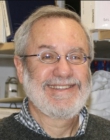
Michael J. Zigmond, emeritus professor of neurology — known for his early work on Parkinson’s disease, for co-founding the Pittsburgh Institute for Neurodegenerative Diseases and especially for changing graduate education to include training in professional development and ethics — died Aug. 28, 2023 at 81.
Beth Fischer spent 10 years as Zigmond’s lab manager before joining his effort to create and present “Survival Skill Workshops” for graduate students. Receiving a National Science Foundation grant to run the workshops at Pitt as a pilot, the project eventually evolved into training others to present the workshops at their own institutions using Pitt’s materials on writing research articles, making oral presentations, obtaining employment and funding, supervising and teaching.
The effort included instructing scientists in developing countries on how to write successful grant proposals and presenting the survival skills workshops at scientific conferences, including at two Chinese universities, which led to affiliations at both for Zigmond.
“He was an incredible force in getting faculty in the U.S., in the sciences, not just to teach the science but teaching (graduate students) everything they needed to be a scientist,” Fischer said.
Teaching ethics in the context of scientific work was an important component, she said. At the time Zigmond started this effort, ethics instruction might just be one lecture by a philosopher or a history of science professor, Fischer said, “but the students didn’t really relate to that.” In contrast, Zigmond’s attitude was: “If we are truly serious about instilling responsible ethical behavior in our students, we have to be role models,” she explained.
“He was just such an amazing networker and collaborator,” she added. “He was constantly trying to build community. Michael was always innovating, trying to make things better. He didn’t think about what he could do, he thought about what we could do — what all of us could do. … He knew that great things were built by collaborations with others. He discussed ideas with others as soon as he got them. He shared widely. And through that he built an incredible research team, with collaborators in the offices nearby his, and as far away as India, China and South Africa.”
Zigmond also “broadened people’s expectations of what they could do,” she remembered. When Zigmond lectured, “he always told them how old he was. He would say, ‘I’m 70 years old and I’m a mid-career professional.’ ”
Born in 1941, Michael Jonathan Zigmond grew up in Cambridge and Belmont, Mass. He earned his bachelor’s degree from Carnegie Mellon University in chemical engineering in 1963 and his Ph.D. in biopsychology in 1968 from the University of Chicago, where his research focused on the impact of acute and chronic stress on the monoaminergic systems.
He joined the Pitt faculty in 1970, where his work included running a research program sponsored by the National Institutes of Health and the Department of Defense focused on brain neurobiology in health and disease.
Zigmond was central to developing Pitt’s graduate neuroscience training program and also created and taught courses in various aspects of neurobiology. His presentations of survival skills workshops with Fischer began in 1985.
Capping his academic career as emeritus professor of neurology, he was also a distinguished international professor at China’s Fudan University and on the faculty of Shanghai University of Traditional Chinese Medicine, and served previously as professor of neurology, psychiatry and pharmacology at Pitt.
He was an internationally recognized neuroscientist as a pioneer in some of the early studies on Parkinson’s disease, and was one of the first scientists to recognize the beneficial effects of exercise in slowing the disease. His later work focused on the effects of social isolation on the brain, evolving from a focus on those isolated by illness to seniors suffering isolation and eventually to those in solitary confinement in prisons.
Zigmond and neurology faculty member Robert Moore succeeded in enlisting the aid of the Scaife Family Foundation and the DSF Charitable Foundation to create the Pittsburgh Institute for Neurodegenerative Diseases in 2003 for collaborative studies of neurodegenerative disorders.
He served on committees at the National Academy of Sciences and elsewhere to develop guidelines and training in professional development and research ethics. He was editor-in-chief of Elsevier's Progress in Neurobiology, an elected fellow (2009) of the American Association for the Advancement of Science, and recipient of the Society of Neuroscience’s Mika Salpeter Lifetime Achievement Award, which honors “individuals with outstanding career achievements who have also actively promoted the professional advancement of women in neuroscience.” He also chaired the society’s committee charged with writing its first code of ethics in publishing.
Alan Sved, now professor emeritus in neuroscience and another of Zigmond’s Pitt collaborators, recalled him as “a very generous colleague.” The two collaborated on grants and published papers, but Sved added: “He liked to talk about science and a lot of what we did together was talk. He just loved the science.
“Michael was a special character,” Sved said. “I doubt my career would have been the same without him. He was very generous with his time and he really wanted people to have success.”
Juliann Jaumotte, senior research scientist at the Pittsburgh Institute for Neurodegenerative Diseases, worked with Zigmond for 20 years. “He would often let me find my way as a researcher to explore ideas of mine,” she said. “I don’t have a Ph.D., and he helped me flourish as a scientist. He would facilitate your connections with everybody. He had an excellent teaching style. He was very approachable and he was trying to make all of us better communicators as well.
“I keep thinking,” she added, “how could he have done all the things he did?”
Zigmond was married for 57 years to Naomi (Kershman) Zigmond and is also survived by children Dan and Leah, grandchildren Maxine, Anna, Yaniv and Amit, and brother Richard.
Memorial gifts are suggested to Compassionate Care ALS, P.O. Box 1052 West Falmouth, MA 02574.
— Marty Levine