

SCI’s Perkoski always focused first on what students needed
Robert Perkoski, teaching assistant professor in the School of Computing and Information (SCI) who spent two decades as director of Undergraduate Information Sciences, died Nov. 8, 2023, at 69.
Recalled Kelly Shaffer, department manager for Informatics and Networked Systems and Perkoski’s colleague since 2006: “He was the most adamant about: we should always talk to our students to find out what they want from a degree program or from the school. … If it was extra work, it didn’t matter. The focus was on helping students get the most out of their degree. Let’s think about pedagogy in a different way. What does the student need from this? He would always be the voice of the student (in faculty discussions). That was always his first and most important focus, on what students needed to be successful.”
As part of that focus, Perkoski served on hundreds of his school’s committees on undergraduate education and advising.
“He was also part of the school and the department’s work to make sure the curriculum was updated on a regular basis and doing a lot of research — What was Penn State doing? What was Syracuse doing?” Shaffer said. “He represented the continuum of students in information sciences,” knowing them from orientation to graduation.
Born Oct. 5, 1954, and nicknamed “Perks,” Perkoski earned his B.A. in psychology from Wittenberg University in Springfield, Ohio, in 1976; his M.A. in education from Slippery Rock University in 1981; his M.S. in information science from Pitt in 1990 and an Ed.D. here in higher education management through the School of Education in 2017.
By the time he became a Pitt alumnus twice over he had long been working here. He began his career as student services administrator at Thiel College in Greenville, Pa. (1980-81), moving to become an education specialist at the nonprofit Community Action Pittsburgh 1(981-1982), and then joined Pitt as a placement counselor (1984-1990), advising students on their career plans.
He then rose to become director of Placement and Career Services (1990-1999), then moving to what was then the Department of Information Science and Telecommunications as an adjunct faculty member for a year before serving as director of the Undergraduate Program in Information Science in what was then called the School of Information Sciences beginning in 2000.
He taught many students through his courses: Introduction to Information Systems and Society, Human Centered Systems, Data Analysis, Analysis of Information Systems, Database Management Concepts and Applications. He mentored many students as well, via independent study courses in Information Science, and continued to advise students.
In addition, he helped to redesign the Bachelor of Science in Information Science curriculum in 2019 and to develop the Bachelor of Science in Computational Social Science and the minor in Information Science. He also aided new faculty and part-time instructors within his department.
That included recruiting Dmitriy Babichenko from the School of Medicine to join the computing faculty. “He was a very good mentor when I first started teaching full time,” Babichenko said. “He was always very good with students. He managed to take the driest material and make it entertaining.”
The pair collaborated on the design of several classes and became friends outside of Pitt. Babichenko recalled that Perkoski’s garage was a great place from which to borrow just about any power tool from his collection: “He would have these tools in the original box, never used.”
Babichenko took over Perkoski’s database management class when Perkoski died. “When I showed up,” Babichenko said, “one of the students actually brought flowers in Bob's memory and two students cried. That showed that he was actually loved by students.”
“Bob is one of those people who was so sociable; he had the best stories to tell,” recalled Kelly Shaffer. “He had his incredible breadth of interests, from music to the latest technology.” While finishing his doctoral thesis here, she said, he was dissatisfied with the reference-tracking abilities of writing software, so he simply designed a new software system for himself.
“He was very funny to the point where your stomach hurts because you are laughing so hard,” she said. “He constantly reminded us not to take ourselves too seriously.
He is survived by his sister, Terri Tunick and her husband, Steve Tunick; niece Rachael Tunick Grometer; nephew David Alan Tunick; great-niece Nora June Grometer; and great-nephew Henry Robert Grometer.
His family has established the Robert R. Perkoski Memorial Fund at SCI to provide undergraduate students with the education and resources they need to enter the world with a mastery of technology to solve societal problems. Contributions may be made online at giveto.pitt.edu/perkoskimemorial, or contact Terri Taylor, director of development, at territaylor@pitt.edu.
— Marty Levine
Neurology’s Zigmond focused on Parkinson’s and helped change graduate education
Michael J. Zigmond, emeritus professor of neurology — known for his early work on Parkinson’s disease, for co-founding the Pittsburgh Institute for Neurodegenerative Diseases and especially for changing graduate education to include training in professional development and ethics — died Aug. 28, 2023 at 81.
Beth Fischer spent 10 years as Zigmond’s lab manager before joining his effort to create and present “Survival Skill Workshops” for graduate students. Receiving a National Science Foundation grant to run the workshops at Pitt as a pilot, the project eventually evolved into training others to present the workshops at their own institutions using Pitt’s materials on writing research articles, making oral presentations, obtaining employment and funding, supervising and teaching.
The effort included instructing scientists in developing countries on how to write successful grant proposals and presenting the survival skills workshops at scientific conferences, including at two Chinese universities, which led to affiliations at both for Zigmond.
“He was an incredible force in getting faculty in the U.S., in the sciences, not just to teach the science but teaching (graduate students) everything they needed to be a scientist,” Fischer said.
Teaching ethics in the context of scientific work was an important component, she said. At the time Zigmond started this effort, ethics instruction might just be one lecture by a philosopher or a history of science professor, Fischer said, “but the students didn’t really relate to that.” In contrast, Zigmond’s attitude was: “If we are truly serious about instilling responsible ethical behavior in our students, we have to be role models,” she explained.
“He was just such an amazing networker and collaborator,” she added. “He was constantly trying to build community. Michael was always innovating, trying to make things better. He didn’t think about what he could do, he thought about what we could do — what all of us could do. … He knew that great things were built by collaborations with others. He discussed ideas with others as soon as he got them. He shared widely. And through that he built an incredible research team, with collaborators in the offices nearby his, and as far away as India, China and South Africa.”
Zigmond also “broadened people’s expectations of what they could do,” she remembered. When Zigmond lectured, “he always told them how old he was. He would say, ‘I’m 70 years old and I’m a mid-career professional.’ ”
Born in 1941, Michael Jonathan Zigmond grew up in Cambridge and Belmont, Mass. He earned his bachelor’s degree from Carnegie Mellon University in chemical engineering in 1963 and his Ph.D. in biopsychology in 1968 from the University of Chicago, where his research focused on the impact of acute and chronic stress on the monoaminergic systems.
He joined the Pitt faculty in 1970, where his work included running a research program sponsored by the National Institutes of Health and the Department of Defense focused on brain neurobiology in health and disease.
Zigmond was central to developing Pitt’s graduate neuroscience training program and also created and taught courses in various aspects of neurobiology. His presentations of survival skills workshops with Fischer began in 1985.
Capping his academic career as emeritus professor of neurology, he was also a distinguished international professor at China’s Fudan University and on the faculty of Shanghai University of Traditional Chinese Medicine, and served previously as professor of neurology, psychiatry and pharmacology at Pitt.
He was an internationally recognized neuroscientist as a pioneer in some of the early studies on Parkinson’s disease, and was one of the first scientists to recognize the beneficial effects of exercise in slowing the disease. His later work focused on the effects of social isolation on the brain, evolving from a focus on those isolated by illness to seniors suffering isolation and eventually to those in solitary confinement in prisons.
Zigmond and neurology faculty member Robert Moore succeeded in enlisting the aid of the Scaife Family Foundation and the DSF Charitable Foundation to create the Pittsburgh Institute for Neurodegenerative Diseases in 2003 for collaborative studies of neurodegenerative disorders.
He served on committees at the National Academy of Sciences and elsewhere to develop guidelines and training in professional development and research ethics. He was editor-in-chief of Elsevier's Progress in Neurobiology, an elected fellow (2009) of the American Association for the Advancement of Science, and recipient of the Society of Neuroscience’s Mika Salpeter Lifetime Achievement Award, which honors “individuals with outstanding career achievements who have also actively promoted the professional advancement of women in neuroscience.” He also chaired the society’s committee charged with writing its first code of ethics in publishing.
Alan Sved, now professor emeritus in neuroscience and another of Zigmond’s Pitt collaborators, recalled him as “a very generous colleague.” The two collaborated on grants and published papers, but Sved added: “He liked to talk about science and a lot of what we did together was talk. He just loved the science.
“Michael was a special character,” Sved said. “I doubt my career would have been the same without him. He was very generous with his time and he really wanted people to have success.”
Juliann Jaumotte, senior research scientist at the Pittsburgh Institute for Neurodegenerative Diseases, worked with Zigmond for 20 years. “He would often let me find my way as a researcher to explore ideas of mine,” she said. “I don’t have a Ph.D., and he helped me flourish as a scientist. He would facilitate your connections with everybody. He had an excellent teaching style. He was very approachable and he was trying to make all of us better communicators as well.
“I keep thinking,” she added, “how could he have done all the things he did?”
Zigmond was married for 57 years to Naomi (Kershman) Zigmond and is also survived by children Dan and Leah, grandchildren Maxine, Anna, Yaniv and Amit, and brother Richard.
Memorial gifts are suggested to Compassionate Care ALS, P.O. Box 1052 West Falmouth, MA 02574.
— Marty Levine
Rankin’s projects as University architect shaped Pitt’s campuses
University Architect Park Lawrence Rankin, who oversaw transformative building and renovation projects on Pitt’s campuses during his tenure (2000-2015), died on Sept. 10, 2023, at 73.
Among his most visible work, he oversaw:
-
Construction and improvements to research and teaching facilities, including the Chevron Science Center addition, Clapp-Langley complex, the Biomedical Science Tower 3 (the largest Pitt construction since the 1970s), the Regional Biocontainment Laboratory, reworking Benedum Hall for the School of Engineering (including an addition for the Mascaro Center for Sustainable Innovation) and the School of Public Health addition
-
Academic department renovations in the Cathedral of Learning, Posvar Hall and the William Pitt Union
-
Athletic venue improvements and construction at the Fitzgerald Field House, Petersen Sports Complex and Trees Hall pool
-
Residence hall development on the Oakland and regional campuses, such as Panther, Irvis and Nordenberg halls and the Darragh Street apartments
-
Historic preservation work at Allegheny Observatory, Alumni Hall and the University Club, as well as the cleaning of the Cathedral of Learning
“A lot of the campus is the way it is today because of him,” noted Daniel Marcinko, assistant vice chancellor for administration in business and operations, who recalled Rankin as well-respected by all. “He was very easy to work with. He was able to make decisions very quickly, especially decisions that needed quick turnaround.
“He was a calm person and very thoughtful and deliberate, and he took pride in his work,” Marcinko added. “He was very steady in his approach to campus esthetics. He liked consistency, and he also wanted to build quality,” from an addition to Falk School to the major renovations to many floors in the Cathedral of Learning, which Marcinko believes had not been done since it was finished in the 1930s.
Rankin earned his bachelor of architecture degree from Kent State University and eventually chaired the American Institute of Architecture as president of the Pittsburgh chapter when it hosted Britain’s Prince Charles during their Remaking Cities Conference.
Ron Leibow, now director of capital project management, worked with Rankin as a senior project manager at Pitt for a dozen years until Rankin’s retirement. Leibow saw the University architect’s role as “the design conscience of the University, responsible for the design stewardship of the University in its current form and its future forms.” He estimates that Rankin was involved in hundreds of projects during his decade and a half here, which included the modern steam plant and the transformation of the University’s bookstore to its current incarnation.
“The improvements that happened under his tutelage are pretty incredible,” Leibow said. “He was contemplative and decisive, which is what I loved. He would think it through and make a decision. He was also collaborative. Those are pretty good traits in leadership.”
He was also tops in his trade: “He understood design systems in architecture. He fully understood how buildings are put together. He knew when he had a good drawing and when he had a bad drawing. He was very good at his craft.
“Project delivery from design through construction is complicated,” Leibow said. “Park was a good problem solver. He was very welcoming of others’ opinions. He was a great mentor in that way.”
Leibow took Rankin on a campus tour several years ago, so Rankin was able to see the completion of some of the last projects he had helped to start. “He was thrilled because he really loved Pitt,” Leibow said.
“He truly understood his craft, and he took great pride in the work produced under his leadership and its contribution to the University’s education, research, and community service mission.”
Park Rankin is survived by his wife of 52 years, Jan Rankin; children David (Kristyna) Rankin and Sean (Elizabeth) Rankin; grandchild Helena Claire Rankin; sisters Mary Jo (Dan) Bethem and Carole (Ron) Richardson; and many nieces and nephews.
A gathering will be held at the funeral home, Pittsburgh Cremation & Funeral Care, 3287 Washington Road, McMurray from 10:30 a.m.-12:30 p.m. Oct. 23, with a service starting at 12:30 p.m.
Memorial gifts are suggested to the American Cancer Society (https://donate.cancer.org).
— Marty Levine
Musa led data analysis program for Center for Social and Urban Research
Donald Musa, whose more than 40-year Pitt career included a decade as director of the Qualitative Data Analysis Program (QDAP) at the University Center for Social and Urban Research (UCSUR), died Sept. 8, 2023.
Musa began his career at Pitt in 1978 as a research specialist and programmer/analyst for the Department of Industrial Engineering in the School of Engineering. After a decade, he joined UCSUR as a senior research associate/research specialist, becoming its QDAP director in 2008.
According to a remembrance from his department, Musa “was instrumental in QDAP, taking the lead on completely restructuring how the qualitative/open-ended student responses for Pitt’s Leavers/Student Retention interviews were coded and analyzed, the applications of which are still in place to this day.”
His research, often involving multiple Pitt schools, included developing, conducting and analyzing surveys on vaccine uptake and hesitancy, racial differences, equity issues and health, trust in medical research and self-care during chronic illness. He was published in leading peer-reviewed journals and was co-investigator or analyst on several grants.
In addition to his work at UCSUR, he was an adjunct assistant professor in the Department of Behavioral and Community Health Sciences at what was then the Graduate School of Public Health (2000-2013), teaching survey research methods. When he retired from Pitt in 2017, he took on a part-time role as senior analyst at UCSUR, working on several projects until shortly before his death.
Musa earned his master’s degree in sociology at Pitt in 1977 and his doctorate in public health in 2005. His career began as a research assistant at Penn State (1969-1972) and then as a researcher for Westinghouse Electric Corp. (1972-1977).
Rich Schulz, UCSUR director during the majority of Musa’s tenure there, recalled: “First and foremost, Don was an extraordinary human being who was universally liked and respected by his colleagues at the center and the University community more widely. He was kind, helpful and respectful toward people he interacted with and thoughtful and sophisticated in his scientific work. He published major papers on health disparities with more than a dozen faculty at the University, including me, and was a major architect and advocate of the Qualitative Data Analysis Program of UCSUR, a widely used resource for faculty throughout the University. He was one of those individuals who measurably improved the quality of life of those around him.”
Scott Beach, director of survey research for UCSUR, became Musa’s colleague and sometime collaborator beginning in 1993. For two decades they worked together on the provost’s office retention surveys, as well as other large-scale surveys of older adults and the state of aging. Beach was also a co-teacher with Musa on the Public Health survey methods class (2000-2009).
“Don was thoughtful and humble,” Beach recalled. “He was a really great scholar and very detail-oriented.”
After decades of friendship, Beach could only remember a few disagreements, and always over their working style, where Musa was slower and more deliberate. “But it was in the spirit of getting the work done,” Beach says. “He was quiet and unassuming — just a good colleague.”
Some of Musa’s most impactful work was in the QDAP program, Beach adds, studying the use of focus groups and in-depth interviewing, as well as in restructuring the way open-ended responses to survey questions were coded and analyzed.
Musa is survived by his brother, Gerald (Diane) Musa, and nephew Eric Musa. Memorial gifts are suggested to the American Cancer Society.
— Marty Levine
Hofkosh supported faculty as she led Pitt’s pediatric residency program
Dena Hofkosh, emeritus professor of pediatrics in the School of Medicine and perhaps best known for directing Pitt’s pediatrics residency program at Children’s Hospital of Pittsburgh from 1997 to 2014, died Sept. 26, 2023, at 68.
Ann Thompson met Hofkosh in 1982, when Thompson was a young faculty member and Hofkosh was herself a third-year resident at Children’s. “She was one of the warmest and most supportive and creative faculty members we’ve had,” Thompson said.
Hofkosh’s career began with a focus on identifying developmental problems in the youngest children “and the kinds of support (pediatricians) needed to give families coping with these challenges,” she added. “It turned out to be very similar to the way she supported faculty for the next 40 years.”
While directing the pediatrics residency program, Hofkosh helped to develop the Combined Program in Internal Medicine and Pediatrics and the Triple Board Program, as well as specialized training tracks within the Pediatrics Residency, including the Pediatric Advocacy, Leadership and Service Program. She supervised the training of approximately 700 pediatricians in total.
Hofkosh served as her department’s first vice chair of faculty affairs, creating the Office of Faculty Development, which instituted programs for faculty orientation, mentoring, educational skills development and career support. She also established the department’s Wellbeing Taskforce and several other programs to promote physician wellness.
Indeed, says Thompson, “through it all she was always looking for opportunities that opened new ways for people to follow their passions. She was really, really good at supporting faculty, helping leaders be supportive of faculty, working out conflicts. She had the same type of warmth and supportiveness toward everyone.”
Even when dealing with residents who needed further instruction, Thompson said, the most severe reprimand Hofkosh could muster was “‘Could we talk about that?’ She was never harsh, always out to solve problems in a constructive, profoundly kind way.”
Hofkosh also established a program supporting LGBT students, residents and faculty and established electives for students on LGBT support. She had the ability, Thompson said, “to open her arms wide to include all kinds of people and make them feel they are all the most important people.”
Sylvia Choi, another of Hofkosh’s former residents and colleagues, remembered Hofkosh as an important mentor and friend: “She had a direct impact on so many of us as residents. She really cared ... not just about the patient and their physical development but their being and their family.”
And, Choi added, “she wanted us to be good pediatricians but she also wanted us to be well and be whole people. Even before everyone else was talking about burnout, she was talking about mental health” for physicians.
Her faculty development work also shone brightly, Choi said: “She was very good at helping people think about what they wanted from their career and how they might achieve that. She wouldn’t tell people what they should do; she would help them see what they wanted to do.
“She modeled how to live life to the fullest. She worked hard and she played hard and she had high expectations of everyone, including herself. Yet she never expected anything from you that you weren’t capable of. She had a way of encouraging everyone to do their best.”
Born in New York City, Dena Hofkosh earned her B.A. and M.D. degrees from New York University, joining the Pitt faculty in 1984 and retiring in 2021. She was also president of the Association of Pediatric Program Directors. The School of Medicine established the Dena Hofkosh Medical School Pride Alliance Scholarship Fund in her honor.
She is survived by wife Kim Patterson; daughters Julia Martin (Derek) and Sarah Weiskopf (Mikynsi Steffan); sister Sonia Hofkosh; brother-in-law Jon Hulbert and their children, Eliza Hofkosh-Hulbert (Ledah Wilcox) and Nina Hofkosh-Hulbert.
Memorial gifts are suggested to the Dena Hofkosh MD Endowed Fund for Faculty Development at UPMC Children’s Hospital (justgiving.com/hofkosh) or the University of Pittsburgh School of Medicine Dena Hofkosh Medical School Pride Alliance Scholarship Fund (engage.pitt.edu/project/27349).
— Marty Levine
Ochester’s influence at Pitt and on poetry ‘hard to overestimate’
Ed Ochester — long-time chair of the English department’s writing program, editor of the Pitt Poetry Series at the University of Pittsburgh Press (establishing its Agnes Lynch Starrett Poetry Prize) and author of more than a dozen poetry collections — died Aug. 22, 2023, at 83.
“He broke open American poetry” to new and diverse voices, said colleague and his successor as writing program chair, Lynn Emanuel, now professor emerita. “He broke open the kind of influence that a poetry series could have.”
“He was just a legend in publishing and editing,” said Jeff Oaks, whom Ochester hired at Pitt and who is now a teaching professor and director of undergraduate studies in the writing program. “He had this wild and eclectic sense of the possibilities of poetry.”
“It's hard to overestimate Ed's influence in any number of areas,” Emanuel said, “not only in the way he ran the poetry series but in the department. He was … a free spirit, even a rebellious spirit. He was courageous and championed projects that weren't even popular in the department or at the dean's level,” such as creating a reading series with some of the department’s budget rather than hiring a new faculty member. “We had this burgeoning writing program and no visiting writers,” she recalled.
He helped to bring national recognition to writing programs, Emanuel said, placing them on the same plain as composition and literature programs as the president, for two consecutive terms, of the Association of Writers and Writing Programs: “At that time it was a new and growing and novel idea to have an MLA (Modern Language Association) convention, but for writers, and Ed was at major influence in that organization.
“The poetry series had a number of very terrific editors,” Emanuel added, “but (previously) the poetry series hewed pretty closely to a kind of national aesthetic. Poetry was really white and male. When Ed took over, all of that was changed. The complexion of contemporary poetry being published by a smaller press just changed.”
In his department, she said, “Everybody thought he was a marvelous teacher and I would get glowing reports about his teaching. The students adored him. His teaching was informed by a deep background in literature but he was also very approachable. Ed was in no way a snob about anything. He had strong likes and dislikes. But he was never the master standing at the front of the classroom. He was at the table sitting with his students talking about their poetry. He was terrific at giving criticism that wasn't cruel or snobbish.”
Oaks, on whose MFA thesis committee Ochester served, agreed: “Because he was an editor, he line-edited, and that was one of the most useful things to sit and watch him do. The thing that I found most wonderful about him and what I learned from him was how to spot a line that wasn't necessary.”
He recalled being “tricked” into learning to write poetry in a different manner: “I remember our workshop — he actually told us to bring in two poems a week. I started falling behind and started writing a different kind of poetry just to make the assignment. He taught us not to put too much pressure on the poems, to trust ourselves. He liked poems that try to move toward the plainspoken, that didn't have too much poetic decoration on them — not getting the poem to be too tragic, to be too intellectual. And he really liked humor; if you could get him to laugh in a poem, you knew you really got to him.”
Later, as a colleague, Oaks said, Ochester “really defended the writing program. There was a lot of tension about what it meant to be a writer, what writers needed to study.”
Oaks added: “So many of the books I learned my poetry from came from the University of Pittsburgh Press,” to which Ochester brought poets of color, LGBT poets and working class poets. “He really championed people across the long haul of careers.”
Born on Sept. 15, 1939, in Brooklyn and raised in Queens, Ochester earned his undergraduate degree at Cornell in 1961, where he was the editor of the campus humor magazine, The Cornell Widow. He received his masters from Harvard and an MFA from the University of Wisconsin–Madison.
He began his academic career on the faculty of the University of Florida in 1967, joining Pitt in 1970. He was editor of the Pitt Poetry Series from 1978 to 2021, publishing hundreds of collections that won or were finalists for the National Book Award, the National Book Critics Circle Award, the William Carlos Williams Award and the Lenore Marshall Poetry Prize, which launched the careers of many diverse American poets.
Alongside creating the Starrett prize in 1981, he served as editor of the Pitt Press’s Drue Heinz Literature Prize and cofounded the poetry journal 5AM.
Ochester published more than a dozen poetry collections, including “Sugar Run Road,” “Unreconstructed: Poems Selected and New,” “The Land of Cockaigne,” “Cooking in Key West” and “Changing the Name to Ochester.” His work earned grants from the National Endowment for the Arts and the Pennsylvania Council for the Arts.
He also was the recipient of the George Garrett Award for Outstanding Community Service in Literature in 2006 and the Pittsburgh Cultural Trust's Creative Achievement Award in 2001. Following his retirement from Pitt, he was on the faculty of the Bennington College MFA Writing Seminars.
“He did so much and he was really humble about it,” Oaks said. “His own poems are so lovely and underrated too. He probably wouldn't even say that. He was just a good heart in the Pittsburgh community.”
“I think about him with great tenderness,” Emanuel said. “He was a very good man and he was a very smart man and he was devoted to poetry when at the beginning very few editors were. He was very special.”
He is survived by his children, Ned and Betsy (Mike Sauter) of Pittsburgh, and a granddaughter, Quincy Sauter.
Memorial gifts are suggested to WYEP.org or the local animal shelter Four-Footed Friends. A celebration of his life and poetry will be announced at a later date.
— Marty Levine
Van Beck Hall was a ‘beloved and master teacher’ for 52 years
Van Beck Hall, history professor emeritus honored with the creation of the department’s annual Van Beck Hall Graduate Teaching Award for his “52 years as a beloved and master teacher,” died Aug. 11, 2023, at 88.
“You don’t hang around for 50 years unless there is something keeping you there — and that was teaching, at which he excelled in every format,” from large lecture courses to seminars, said long-time departmental colleague Bruce Venarde, professor emeritus. Venarde remembered a teaching assistant in Hall’s Early American survey course remarking: “Van Beck Hall is a rock star.”
“He took me under his wing, early on,” as a mentor, Venarde said. “Van was a wonderful, generous mentor” to him and to others in the history department. “He was just a marvelous presence. Almost always cheerful. He would go around the hall whistling.”
And, Venarde added, “he was a very proud eccentric” who never used a computer, although he retired in 2015. Occasionally, he would ask an office colleague to check his email or enter his grades. He had no cell phone either.
In 2007, the University Times reported that Hall, advocating for increased bus funding at a public meeting, began his remarks by noting: “I’ve lived in Squirrel Hill since 1964. We got rid of our automobile in 1965, so I’ve done a considerable amount of PAT bus riding over the years.”
And a lot of walking. Fifty-year colleague and friend Seymour Drescher, distinguished university professor emeritus, used to walk with Hall to and from campus, in any weather, using trails through Schenley Park to get to Oakland.
He recalled Hall as “a man of measured and forceful words. When I was asked to serve as chair of our department of history, my only condition was the appointment of Van to be my assistant, and he served me very faithfully and well.” In turn, he said, one of Hall’s great traits “always was his own leadership in the faculty drive for unionization,” during the earliest efforts of decades ago. Drescher remembered once when Hall gave a speech to a group of liberal arts faculty, “to a rousing ovation, and a colleague sitting next to me whispered, ‘That was Lenin’s ghost.’”
“He was committed to a faculty union, starting in the early 1970s,” Venarde added. “I’m glad he lived long enough to see that.
“He was totally genuine,” Venarde added. “You always knew exactly where you stood with Van, which is not to say he was unkind. Quite the opposite. But he was completely direct, completely genuine. Just a wonderful person.”
Hall was twice chair of his department, where he taught American history and authored the 1972 University of Pittsburgh Press book, “Politics Without Parties: Massachusetts, 1780-1791.”
He served on Faculty Assembly in the 1990s and 2000s, and as co-chair of the Senate Council's Plant Utilization and Planning committee.
Born in Charleston, W.Va., he was a captain in the U.S. Air Force and beginning in 2003 chair of the board of trustees of First Baptist Church in Oakland, where a memorial service will be held at 11 a.m. Sept. 23.
He is survived by his wife of 63 years, Paula Hall, and his children, William Blake Hall and Elizabeth Ann Hall. Memorial gifts are suggested to First Baptist Church or the Native American College Fund.
— Marty Levine
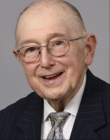
Business school’s Zoffer ‘was a giant among academic deans’
H.J. “Jerry” Zoffer, the 28-year dean of the Joseph M. Katz Graduate School of Business and College of Business Administration under whose “remarkable leadership the school advanced dramatically in terms of quality, impact and reputation,” as current Dean Eugene Anderson memorialized him, died July 22, 2023, at 92.
“Jerry Zoffer was a giant among academic deans,” Anderson remarked to the University Times. “The Pitt Business community is deeply indebted to him for his vision and leadership, and his outstanding contributions to the growth of our faculty and programs. … He is an inspiration to us all and it is from his shoulders that we look forward to a promising future.”
Zoffer was dean from 1968 to 1996 and a faculty member for 67 years until 2020, directing Katz to become a top business school. He led the re-establishment of Pitt’s undergraduate business program, the construction of Mervis Hall, the institution of the part-time MBA and Executive MBA programs and the establishment of several new dual degree programs with other Pitt schools and colleges.
He also undertook a new partnership in Budapest for the school in the 1980s that led to the school’s Executive MBA Worldwide program. Pitt established the H.J. Zoffer Chair in Leadership and Ethics in 2016 to honor Zoffer’s many contributions during his career.
While at Pitt, he also served as president of the American Association of University Administrators and the American Assembly of Collegiate Schools of Business. He was on the boards of numerous business and community organizations. Among his many awards, in 1986 he was selected as man of the year in education by Vectors-Pittsburgh. He was also the author of many articles as well as books on individual and group decision-making under risk, the social responsibility of business, continuing education for managers, business ethics, corporate risk analysis, accounting education and improving institutional credibility.
In the memorial message on the Pitt Business website, Arjang Assad, dean of the school from 2015-22, said: “Jerry built one of the world’s strongest and most influential faculty groups in business ethics and corporate social responsibility. In the process, he put Pitt Business on the international map, taking us from a regionally recognized institution to one with global acclaim.”
Added Vicky Hoffman, business administration faculty member: “Jerry was a visionary leader who implemented initiatives we still value today. For example, Jerry was one of the first to actively recruit to Pitt’s MBA program Black students in the late 1960s and women in the early 1970s. He was instrumental in implementing the flagship one-year MBA program that had over 300 students in its heyday and was the force behind re-starting Pitt’s undergraduate College of Business Administration in the mid-1990s. After 28 years as dean, Jerry made the unusual move of going back to teaching, which he approached with the energy and enthusiasm he brought to everything he did.”
“The one word to describe Jerry Zoffer is indomitable,” recalled Carrie Leana, another of Zoffer’s Katz faculty colleagues. “He cared passionately about the Katz School and the University of Pittsburgh, and fought vigorously for its success, but always with that infectious grin and a twinkle in his eye. One just couldn’t say no to Jerry!”
Pre-deceased by his wife, Maye Rattner Zoffer, he is survived by his children Gayle (David MacNaughton) and Bill (Caryn Zimmerman); his brother Joseph; his grandchildren Josh, Emily, and Mollie; his long-time partner Sorel Berman; and many nieces, nephews and cousins.
Memorial contributions are suggested to the University of Pittsburgh General Scholarship Fund or to Temple Sinai of Pittsburgh.
— Marty Levine
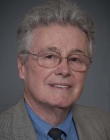
Murphy was the go-to problem solver at McGowan Institute
John N. Murphy, a top leader of the McGowan Institute for Regenerative Medicine, died June 13, 2023, at 83.
As executive director of McGowan, Murphy was essentially its chief of operations, said William Wagner, McGowan co-director under whom Murphy served for the past dozen years, “with so many of the faculty whose careers and lives he impacted,” Wagner added. “There are dozens of us who can point to our resume and say, ‘This (accomplishment) is because John took time to listen to an unsuccessful grant proposal attempt or other challenges.’”
He described Murphy as the go-to person for both solving internal challenges and guiding visitors through the institute’s work, for dealing with the University’s administrative requirements and for keeping the institute running day to day.
Murphy also was known for writing “extremely effective … letters of nomination and support for dozens of faculty” awards and projects, “sometimes secretly,” Wagner said. Such nominations “were very impactful for a lot of people.”
“He was delightful,” Wagner recalled. “You’d never hear a word of complaint. Always excited to get things going. Stoic (but) friendly, positive attitude, always upbeat. If you have some bit of a challenge, he was someone who could give you good advice. He used to always say, ‘You can’t win if you don’t play.’ ”
Patrick Cantini, McGowan’s strategy and business development officer, joined McGowan with Murphy in 2001 but also worked with him earlier in other capacities.
“John was a constant,” Cantini said. “He was a steady force. Regardless of the situation … of the challenges, John was there to face it and overcome the challenge. He was a resource beyond resources. He was one of those steady rocks. He was there, regardless of the time. He was a true gentleman, kind and engaging and his door was always open. His demeanor, his work ethic were just beyond what I’ve ever seen in anybody.
“John’s most enduring asset was his ability to engage people,” he added. “At our donor events especially, John was the socializer in the room. He would engage with anyone in the room and make them feel welcome and make them feel one of us. People just gravitated to him and listened to him talk about the qualities of McGowan.”
A graduate of St. Justin Catholic High School (1957), Murphy earned his bachelor’s degree in electrical engineering from Pitt (1961) and later his MBA from Duquesne University.
He began his career as an electrical research engineer at the U.S. Bureau of Mines and advanced to director of the Pittsburgh Research Center of the bureau in 1978, working with mining organizations worldwide on health and safety issues for miners. He developed micro-ventilation circuits that are still being employed.
His work with many federal agencies resulted in collaboration with NASA in the 1960s, assessing the safety system of the Titan II rocket, which was to propel Gemini program vehicles into space.
By the late 1990s, Murphy had become senior scientist at the Pittsburgh lab for the National Institute for Occupational Safety & Health and joined Pitt’s Department of Chemical and Petroleum Engineering in the Swanson School of Engineering, where he taught courses on safety and other issues. When the McGowan Institute hired Alan Russell, another chemical engineering professor, as director, Russell brought Murphy aboard in 2001. McGowan had earlier concentrated on developing medical devices, but that year it took on its current name and focus.
His early work at Pitt included developing a pioneering interactive classroom for team and computer work among engineering students. He held a pair of patents, published nearly 100 technical publications and served as president and member of the SME Foundation, the National Mine Rescue Association and the Institute of Electrical and Electronics Engineers. Among his honors are the Department of Interior Distinguished Service Award, the Presidential Rank Award for Meritorious Executive and the Presidential Award for Distinguished Executive.
“John put his stamp on every aspect of McGowan,” Cantini said. “His legacy is that he was everywhere. He just gave 100 percent of himself to the Institute.”
He is survived by son Michael and his wife Catherine, brothers Thomas and Richard, and three grandchildren.
Memorial gifts are suggested to the SME Foundation or the McGowan Institute for Regenerative Medicine.
— Marty Levine
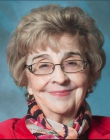
Greenberg made history lively for generations of undergrads
Emeritus Professor of History Janelle Greenberg, well-known for her highly valued undergraduate teaching and highly readable research into the origins of early modern British thinking, died June 6, 2023.
“She was just a tremendous teacher and a really talented researcher as well,” recalled George Reid Andrews, Distinguished Professor of History, who noted Greenberg’s rare distinction of moving from part-time to full-time in the department, and becoming only the department’s second female full professor.
Greenberg was honored with one of the first Chancellor’s Distinguished Teaching Awards in 1989.
“She was able to take these pretty dry topics and get students engrossed in them in the classroom,” he said, adding that her research into the origins of British Constitutionalism uncovered the Medieval roots of British thinking about how to give subjects powers to protect themselves from over-reaching by the monarchy.
He recalled substituting in Greenberg’s classroom at times when she had to attend a conference, and presenting a lecture she had prepared. He would pause to ask students about certain terms in the lecture, and witnessed the enthusiastic debates this engendered.
“It was some of the most lovely class discussion I had ever led on something I knew nothing about,” he said.
Andrews was chair when Greenberg came up for promotion and knew he’d also need to read her latest book, which was “The Radical Face of the Ancient Constitution: St Edward’s ‘Laws’ in Early Modern Political Thought.” “I could see this was exactly what she was doing in her classes,” he observed — explaining very complicated history in engaging ways.
Greenberg taught in the department for more than 40 years, and Professor Emeritus William Chase was her colleague and friend for the last 39 of them. “She had a really good sense of humor and a deep sense of humanity,” he said. “She was less impressed by the number of articles and books the person could publish than their quality as a colleague. How do you treat students and treat fellow faculty members? Those things were very important to Janelle.
“I learned a lot from watching her, the way she reacted to students and treated them,” he added.
Liann Tsoukas became a colleague in 2000. “She instantly reached out to me and served immediately in the department both as a role model and a mentor. She didn’t have an ounce of pretension or superiority. That’s just not how she carried herself.
“She always graded her own material. She just humanized the classroom for undergraduates. She was very perceptive about how people learn and how people live their lives. That definitely was a model for me.
“She had this great whimsical sense of humor,” Tsoukas continued. “She would say, ‘Sometimes if I feel like I am losing the students I will tell a wacky story about the past.’ Those students felt seen and heard and known in her classrooms.
Twenty-year departmental colleague Bruce Venarde recalled Greenberg as “a force of nature, but unlike many forces of nature she was a lot of fun to be with, because she was hilarious. She was just extraordinary: an outstanding historian, an outstanding and at this time just legendary teacher and an outstanding colleague.
“She was a wonderful mentor to me when I entered the department, in fact throughout my time at Pitt, and a very generous mentor to other new arrivals in the department.”
He recalled her generosity to the office staff, whom she invited to lunch every month or two. Grace Tomcho, the office’s administrator for 35 years, now retired, remembered those occasions well. When asked if she were coming along to those staff lunches, Greenberg would say, “No, no, I just want you girls to go to lunch and you talk about all of us,” Tomcho said.
“She was very caring,” Tomcho added. “She was a bright light in the department. She always watched over the staff. If anyone gave the staff any type of problems, she was there. She always came in with a smile and always asked how we were doing.”
Janelle Greenberg was born on April 3, 1938 in Muskogee, Okla. She graduated from Stillwater High School as a music major in 1956. She attended the University of Houston on a band scholarship but eventually turned to the study of history, receiving her bachelor’s degree in 1960. She then completed her master’s thesis in English history in 1963 under Corinne Weston, later her co-author for “Subjects and Sovereigns” from Cambridge University Press. Greenberg earned her Ph.D. in history from the University of Michigan in 1970.
She joined Pitt as a part-time lecturer in 1973 and was promoted to part-time assistant professor (1978-1989), gaining full-time status and tenure and then becoming a full professor in 2001.
Greenberg served as a thesis advisor for many students in history and in the Honors College. In a video on Pitt’s YouTube channel about Greenberg’s teaching, she says: “It’s so invigorating, it’s so exciting, teaching these people this stuff that is going to make them, I honestly believe, better human beings and certainly better citizens, better able to participate in our democracy, and I love that — I just love it.”
She is survived by her husband of 62 years, Martin; three children, Joshua, Rebecca and Steven (Beth); three grandchildren, Arella, Ezra and Pearl; a brother, David (Jenny); a sister, Nancy (Breck); a brother-in-law, Howard; nieces Joyce and Lisa, and other relatives.
— Marty Levine
Chemistry’s Straub was a ‘student-centered professor’
Darel Straub, who spent more than 30 years teaching in Pitt’s Department of Chemistry (1967-1998), died May 22, 2023 at 88.
“He exemplified what it meant to be a student-centered professor,” recalled George Bandik, who became a Pitt chemistry graduate student here in 1980, then Straub’s colleague, and is now teaching professor of chemistry and assistant dean in the Dietrich School of Arts & Sciences.
“He had an amazingly strong commitment to undergraduates and undergraduate education that is the legacy he left us,” Bandik said. “I learned an awful lot from him to be able to do what I do” as an administrator.
Straub was associate professor of inorganic chemistry and well known for his courses in general chemistry. His research involved synthetic inorganic reactions, particularly iron complexes with sulfur ligands.
But he also was known for his wide-ranging administrative work in the department, including a stint as assistant chair, during which he handled everything from book orders to teaching assistant scheduling. He was an undergraduate advisor when Bandik was in charge of advising.
Straub’s attention to student needs was recognized in several important ways during his Pitt tenure. Each year, the top academic student in each class is awarded the Phillips Medal, but on Straub’s retirement he was awarded the first and only Phillips Medal given to a non-student. The department’s undergraduate chapter of the American Chemical Society’s annual outstanding service award also was given to Straub.
Bandik remembered Straub as a “gentle, quiet person” who entertained the chemistry faculty with slide shows each year following his world travels and enjoyed accompanying colleagues to symphony concerts.
Darel Kerr Straub was born May 17, 1935, in Petroleum Center, Pa. He earned his degrees from the University of Florida–Gainesville and University of Illinois–Urbana-Champaign, then began his academic career at Allegany College before joining Pitt. At the University, he mentored 11 doctoral students and wrote many published research papers as well as books.
He is survived by his brother Daniel H. Straub and wife Linda, his many nieces, nephews, great nieces and great nephews and all of their families.
— Marty Levine

Katie Pope remembered for helping forge Pitt’s Title IX efforts
Catherine “Katie” Elizabeth Pope, inaugural associate vice chancellor for strategic operations and planning in the Office of Equity, Diversity and Inclusion and its first full-time Title IX coordinator, died May 23 at 49.
“She was an amazing colleague, incredibly resourceful and dependable,” said Clyde Wilson Pickett, vice chancellor for equity, diversity and inclusion. “She reached out and offered contacts and assistance” when Pickett arrived at Pitt in 2020, he recalled. “She was just a committed professional.”
A departmental remembrance noted her rise to associate vice chancellor for civil rights and Title IX in October 2019 before attaining her final title last year.
“Katie helped forge the very foundation of the University of Pittsburgh’s Title IX efforts,” Chancellor Patrick Gallagher said. “Today, we are a better University and a better community because of her steadfast leadership, inspiring example and unyielding quest to do the right thing at each and every turn.”
Kathy Humphrey, former senior vice chancellor for engagement, said of Pope, “All who knew her were struck by her commitment to her work, her keen strategic mind and her empathetic soul,” while former OEDI head Pamela Connelly recalled that “Katie Pope was one of the most intelligent, strong and empathetic individuals I have ever known. She embodied the values of equity, diversity and inclusion not just during her workdays at the Pitt campuses, but after hours, seven days a week, all-year round. She spent decades fighting to affect change in our culture surrounding sexual misconduct.”
Born in Ohio, Pope earned her undergraduate degree at the University of Dayton (1996) and a master’s degree in philanthropic studies at Indiana University (1999), as well as a master’s degree in interdisciplinary studies at Iowa State University (2005). She had been pursuing a doctorate from Pitt’s School of Education at the time of her death.
Her early career encompassed work as executive director of the Assault Care Center Extending Shelter & Support and the YMCA, both in Ames, Iowa, and at a women’s shelter in New York City .
Her career in higher education included Title IX coordinator for Allegheny College in Meadville, Pa., and at Washington University in St. Louis, where she was development director for the School of Architecture. She worked next in educational programming and outreach for Iowa State and then was named director of Purdue University’s Women’s Resource Office (2006).
She then assisted in its merger into that university’s Susan Bulkeley Butler Center for Leadership Excellence, where she was named its managing director. There, Pope supported programming and outreach across Purdue for women, underrepresented minorities, those from indigenous nations and people with disabilities.
After coming to Pitt in 2015, Pope expanded her department’s outreach and programming, helping to formulate its mission and hire essential personnel.
Speaking from his office, Pickett noted Pope’s work putting together the University’s Title IX civil rights team; her efforts with Carrie Benson, senior manager for prevention and education in the Title IX Office, on the department's sexual misconduct prevention efforts, where Pope was “definitely a champion for this work”; and her crucial participation in the committee organizing and running Pitt’s annual diversity forum.
“She understood the importance of being involved in the community,” Pickett added. “All of our community engagement pieces she was directly involved with, most recently working to put together an ambassadors program to match our employees with community members” — a program the department intends to continue developing. This past year Pope was focused on bringing about the department’s community awards program.
She was, overall, “personable and authentic,” he said. “We have heard overwhelmingly from colleagues who expressed their appreciation for having a chance to work with her.”
Pope is survived by her husband, Bill Kannel; daughters, Ellie and Erinn; parents, Betsy and Ed Pope; in-laws Ed and Margie Kannel and their children; and many loving aunts, uncles and cousins and extended family and friends.
A memorial service for friends and family is being planned and will be announced.
Memorial gifts are suggested to support colon cancer prevention and research or to a GoFundMe account in support of the education of her daughters.
— Marty Levine
Psychiatry’s Kaplan left Pitt to start training program at NIMH
Barry Kaplan, a former psychiatry faculty member in the School of Medicine and director of the Molecular Neurobiology and Genetics Program at Western Psychiatric Institute and Clinic who went on to run an important new training program at the National Institute of Mental Health (NIMH), died April 15, 2023.
Kaplan was born in the Bronx, N.Y. He earned his bachelor of arts and master of science degrees in biology from Hofstra University and his doctorate in cell and developmental biology from Cornell University’s College of Medicine in 1974. He undertook postdoctoral studies at the Andrus Gerontology Center of the University of Southern California in 1976, taught first at Cornell’s medical school and then joined the Pitt faculty in 1984.
At the University, his department’s remembrance said, “He made significant contributions to the understanding of the molecular and genetic basis of neuropsychiatric and neurodegenerative disorders.” His research “focused on the subcellular compartmentalization of neuronal gene expression, using the giant axon of the squid, primary sympathetic neurons and transgenic animal models. His work has led to significant advances in our understanding of the mechanisms of axonal RNA transport, neuronal microRNA function, and synaptic protein synthesis, which has provided fundamental insights into the molecular basis of neuronal growth and development.”
He joined the NIMH Intramural Research Program in 1997, and became its first director of the Office of Fellowship Training. There, he created the first training office on the National Institutes of Health (NIH) campus, “and was responsible for the development of a multidisciplinary neuroscience training program for hundreds of postdoctoral fellows, clinical research associates, graduate students, post-baccalaureate fellows and summer students,” his department said.
He was chief of NIMH’s Section on Molecular Neurobiology (1998-2018) where “his dedication to mentoring young scientists was unparalleled, inspiring countless individuals to pursue careers in medicine and neuroscience.”
He also served on many professional journals’ editorial boards and on several NIH scientific review committees and advisory boards, influencing the development of graduate programs, evaluating research proposals and funding scientific projects.
Psychiatry faculty member Judy Cameron, who had an office beside Kaplan for more than a decade at Western Psychiatric, recalled her colleague as “just a character” and “a very good neurobiologist. He cared an enormous amount about students and training.”
She remembered trying to recruit him to join a retreat among faculty at the Center for Neuroscience around 1987, and getting his response: “I care about training, but I will never retreat.” Cameron saw him a few years ago at NIMH, she said, and Kaplan told her: “Well, that came back to bite me. I run the training program and I’m constantly trying to get faculty to do things.”
The NIMH wrote of Kaplan as “a dedicated scientist, a compassionate mentor, and a beloved friend and colleague…”
He is survived by his wife Annie Kaplan, son Raymond, daughter-in-law Glennyce and grandson Sebastian.
Memorial contributions are suggested to CurePSP.
— Marty Levine

School of Medicine’s ‘Tica’ Hall was ‘driven to help everyone around her’
Martica “Tica” Hall, a leading expert on sleep and circadian science as professor of psychiatry, psychology, and clinical and translational science in the School of Medicine, died March 18, 2023.
Daniel Buysse recalls meeting Hall when she was a graduate student here in 1994. She later became his colleague and long-time collaborator, co-directing psychiatry’s training program in sleep medicine, working as co-investigators on numerous other grants and co-authoring more than 125 papers.
“She essentially lived in the lab for her dissertation study, which still stands as one of the best examples of experimental stress effects on sleep,” said Buysse (distinguished professor of psychiatry, clinical and translational science, and medicine and UPMC Endowed Chair in Sleep Medicine) at Hall’s recent memorial service. He highlighted her elections as president of both the American Psychosomatic Society and the Academy of Behavioral Medicine Research and her service on the Sleep Research Society’s board of directors.
“In these roles, Tica did what she loved: Planned and executed scientific meetings that brought together investigators from diverse disciplines — stress, sleep, circadian rhythms, health, disparities. Tica paid attention to what was happening in science, identified where the gaps were, and built bridges between people to make that science better. She is widely credited in each of these organizations with bringing sleep to behavioral medicine and vice versa. And at every step of the way, Tica found ways to support trainees.”
Interactions with Hall “encouraged her younger colleagues and shared her astonishment and fascination with science,” Buysse said.
During the past seven years, Hall and Buysse ran a weekly seminar for sleep and circadian science trainees at the University. Hall also established the Sleep and Circadian Workshop in Indispensable Methods to offer a brief training course to underrepresented trainees and those from institutions with fewer resources.
After joining Pitt’s faculty in psychiatry in 1998, she published more than 230 peer-reviewed papers and 15 invited publications, and presented dozens of invited, keynote and distinguished scientist talks locally, nationally and internationally. She received more than 40 funded grants and mentored about 75 trainees.
Psychiatry department chair David A. Lewis recalls Hall as “a superb scientist, dedicated mentor and excellent teacher.” He met Hall when, as a post-doc, she took his class on translational neuroscience. “She was passionate then about promoting and provoking the best discussions among the members of the class, and she carried that same enthusiasm into her many years of outstanding service and contributions to our department. Her accomplishments as a scientist and teacher were appropriately recognized by the highest honors in her field. She was a consummate colleague to those who had the opportunity to work with her.
Psychiatry colleague Beatriz Luna remembers speaking with Hall at 9 a.m. some days and being told, “Oh yeah, I just got home,” as Hall had been working all night on a paper, a grant, or a mentoring plan for students. Luna describes Hall as “passionate and never, ever giving up. Tica was just inherently driven to help everyone around her: ‘No, we’re going to make this happen.’ She led not only her own grant but big, collaborative program grants that really led the science into new areas.” Hall, she said, was “just a really remarkable individual who stood above most of the people you know, not just for her brilliance, but for her caring nature.”
Born in San Tomé, Venezuela, Hall earned a bachelor of arts in psychology from the University of Memphis in 1989 and a master of science in medical psychology from the Uniformed Services University of the Health Sciences in Bethesda, Md. in 1993. She was awarded her Ph.D. from Pitt in biopsychology two years later.
She received her second appointment at Pitt, in psychology, in 2005, and then in the Clinical and Translational Science Institute in 2007. She became director of the data management core in Medicine’s Sleep and Chronobiology Center in 2012, co-director of the Translational Research Training in Sleep and Circadian Science in 2014 and co-director of the Center for Sleep and Circadian Science in 2016.
“Hall’s research incorporated both behavioral medicine and sleep medicine, and she was a leading force in the integration of these two fields,” her department noted in a tribute. “She introduced sleep and circadian rhythms as mechanisms and moderators of health in their own right, as well as in combination with other behavioral factors, and conducted pioneering work examining heart rate variability during both sleep and wakefulness. For many years, sleep medicine focused on disorders (such as sleep apnea) in relation to disease risk, but Dr. Hall’s work contributed to the recognition that other characteristics of sleep (such as duration and timing) could play a comparably important role in health outcomes. Her most recent research included a National Institute on Aging grant examining whether disturbed sleep, as measured by poor multidimensional sleep health, augments the effects of depression on biological aging.”
She was honored with the American Psychosomatic Society Distinguished Scientist Award in 2022, and the society presented her its first annual Martica Hall Award in Sleep Medicine. She was chair of the National Institutes of Health’s Biobehavioral Mechanisms of Emotion, Stress and Health study section and of its Mechanisms and Consequences of Sleep Disparities study section, and of the National Institute on Minority Health and Health Disparities Center for Scientific Review Special Emphasis Panel.
She also received many mentorship awards including the Academy of Behavioral Medicine’s Research Mentor Award, the Sleep Research Society’s Mary A. Carskadon Outstanding Educator Award and the Department of Psychiatry’s Outstanding Mentor Award.
“She was one of the very few people who was a member of the graduate faculty of the psychology department,” recalls Hall’s colleague Meryl Butters, “because she cared so deeply about educating Pitt graduate students in psychology. It’s an honor. She was very proud of it. She was fully invested in Pitt as a research university, beyond the medical school.
“Anything she took on she made sure that she finished one-hundred percent, much more than the average person.”
That included Hall’s diagnosis of breast cancer, Butters said. Hall joined a then-new local group of breast cancer “thrivers and survivors,” 412Thrive, in 2020. “These women looked up to her and how she was handling her illness and continuing her profession and she became a mentor to some of the younger women in the group.”
“She considered living with cancer part of ‘her journey’ and not a battle to fight,” Butters recalled at Hall’s memorial. “She lived her life with what I can only describe as gusto, and … she was always a deeply compassionate mentor, colleague and friend. She had exceedingly high standards for each of her personal undertakings, and she only knew one way to live, which was ‘all in.’ This meant that when anyone in her sphere was challenged or distressed, she was truly there for them, as both a cheerleader and renderer of all manner of aid, as needed. In keeping with her enduring approach to life, she always did ‘whatever it took.’”
She is survived by her husband Ken and her son Gabriel.
Memorial contributions are suggested to 412Thrive, 44 Woody Crest Drive, Pittsburgh PA 15234.
— Marty Levine

Bartholomae changed how Pitt taught composition
David Bartholomae, who transformed the teaching of composition at Pitt, creating a national reputation for the University and spreading this new approach to other institutions, died April 4, 2023.
“He was a real leader in the field of composition studies,” said Professor Gayle Rogers, who currently chairs the English department, which Bartholomae chaired for 14 years. “He helped reinvent the way what we now call first-year writing is taught, from an old top-down model — the professors know the rules and drill them into students’ heads — to thinking of the students as real creators who are full of ideas.”
Bartholomae’s approach worked to “help students create writing that is more experiential and grounded in where they have come from, where they are trying to go and what good teachers can bring out from the imaginative power of students,” Rogers said. “That approach was just a massive, seismic re-orientation of how composition is taught,” aided by the widely used anthology, “Ways of Reading,” co-edited by Bartholomae and Anthony Petrosky, School of Education faculty member.
For many years, Bartholomae also co-edited an influential book series from the University of Pittsburgh Press with Jean Ferguson Carr, emeritus faculty member in English. “This was the pre-eminent series in composition studies for the field,” Rogers recalled.
“He was deeply passionate about the instruction of first-year writing and he wanted Pitt to be known for that,” he added. “Most universities taught it as something you just rubber stamp and move on until you get to the real experiences of college. His idea was: This is where college begins. He dedicated his scholarship to thinking about that.”
Perhaps his most cited works, Rogers said, were the essay “Inventing the University” and the book “Writing on the Margins.” Bartholomae’s last book, “Like What We Imagine: Writing and the University,” was published in 2021 by the Pitt Press.
Among his many awards, Rogers added, Bartholomae was perhaps most proud of being named 2014 Pennsylvania Professor of the Year by the Council for Advancement and Support of Education and the Carnegie Foundation. His other awards include a 1995 Chancellor’s Distinguished Teaching Award.
“I knew him by reputation before I came to Pitt,” said colleague Annette Vee, who joined the English faculty in 2010 and became director of composition in 2018 upon Bartholomae’s retirement. “It was one of the things I appreciated about Pitt when I came to Pitt — even Dave Bartholomae taught first-year writing. His legacy here is still quite present — and across the field — to take student writers very seriously, to treat them as intellectuals grappling with problems that we in the academy grapple with.”
Vee had observed Bartholomae teach and admired “the way that Dave had students think about language, the way language works … not just language of capital A Authors but the language of everyday people.” There was a deep respect for this kind of writing that everybody could do, not just literary authors, she explained
“In his last year of teaching, he had asked to be assigned to our Workshop in Composition course for student writers who need extra help” — not usually an assignment requested by, or given to, someone at the top of his field.
“Composition is often looked down upon in English departments,” she said. “At a lot of universities, composition is not the most prestigious study. But that’s not the case at Pitt. I would attribute quite a lot of it to Dave. He’s had a strong influence on the way we teach but also on our professional identity here in composition.”
David Bartholomae, born April 20, 1947 in Akron, Ohio, received his undergraduate degree from Ohio Wesleyan University and earned his Ph.D. from Rutgers in 1975. He joined the Pitt English department that year, rising to the rank of professor. His research focus on composition, literacy and pedagogy, as well as rhetoric, American literature and American studies, resulted in a large number of book chapters and articles. His other books include “Facts, Artifacts, Counterfacts: Reading and Writing in Theory and Practice” (1986) and “Reading the Lives of Others: History and Ethnography” (1994), both with Anthony Petrosky.
He also wrote, with graduate students, an online, illustrated history of Pitt’s English Department.
On the occasion of teaching his last class, Bartholomae wrote the following to colleagues:
“I’ve taught intro writing courses just about every semester since 1973. I’ve learned to read and to value student writing for what it is and what it does, and for what it can and can’t do, particularly over time. … I was teaching writing as a way for writers to generously and productively locate themselves in worlds they don’t and can’t command, worlds both physical and discursive—an appropriate lesson, I believe, for the work of academy and for life as an adult. … preparing students to write these essays has been the preoccupation and delight of a long career.”
A memorial is being planned for May at Pitt.
He is survived by his wife, Joyce; children Jesse Bartholomae, Daniel Bartholomae and Catherine Liese, and siblings Rebecca, Philip and Suzanne Bartholomae.
Memorial gifts are suggested to the David Bartholomae Fund, University of Pittsburgh, P.O. Box 640093, Pittsburgh, PA 15264-0093 or www.giveto.pitt.edu/bartholomae, which aids Dietrich School of Arts & Sciences undergraduates.
— Marty Levine

Wood was a founding member of neuroscience department
David C. Wood, emeritus associate professor of neuroscience — a founding member of the department and creator of the Neuroscience Learning Lab Fund — died March 10, 2023, at 86.
Wood joined the Pitt faculty in 1969 and was among four professors recruited from psychology to form what was then the Department of Behavioral Neuroscience.
“He was one of the key members of the department,” said Stephen D. Meriney, professor and department chair.
Wood taught an important introductory course in neuroscience for undergraduates, Meriney noted: “He was a really great teacher. He was someone who was very passionate about the mechanisms behind what occurs in the nervous system. That is very technically challenging. He took a very hands-on approach. He did a lot of demonstrations and worked with the students more one on one and I think that was appreciated.”
Wood’s research focused on learning in simple pond-dwelling organisms called stentors. He studied their behavior at the molecular level of habituation (adaptation after repeated exposure to stimuli) as a foundation for understanding that process in higher animals.
Wood remained very active in teaching in later years, well past his official retirement in 2007. “His legacy was solidified when, after his retirement, he decided to donate a large sum of money to the department for the purpose of developing a teaching laboratory,” Meriney said. The department had never had a lab for teaching the basics of neuron function, and Wood also also wanted to create an opportunity for a new teaching faculty member, concentrating on the neurobiology of learning, centering around invertebrate animals.
Meriney joined the faculty in 1993 and counts Wood as a mentor: “He was a very supportive senior faculty member. He was always helping faculty get started and solve problems,” including loaning them his equipment and supplies. “He was a very interactive, friendly and supportive colleague.”
Born May 21, 1936, in Buffalo, N.Y., Wood attended Nichols School in Buffalo, Williams College in Williamstown, Mass., the Harvard Graduate School of Education and the University of Michigan, where he earned his doctorate in psychology in 1968.
His first faculty position was at Yale, but shortly afterward he joined the psychobiology faculty at Pitt.
He is survived by his wife of 63 years, Diana Marston Wood; son Sargent Wood (Bonnie Chen), daughter Cynthia Henshaw (John Henshaw) and three grandchildren, Annemarie Wood and Gabriella and Nathaniel Henshaw.
A memorial service is being planned for the summer.
— Marty Levine
Betty Victor was ‘director of everything’ at the Swanson School
Betty Victor, long-time director of administration for the Swanson School of Engineering whose career at Pitt spanned more than 50 years, died Jan. 9, 2023, at 81.
“She was really director of everything,” said Swanson Dean Emeritus Gerald Holder, under whom she worked for more than two decades beginning in 1997. “She worked very hard, all the time. She was the person people went to when they needed an issue they wanted to have solved” — even those from outside the school, including other deans, he noted.
As director of the Office of Administration, Victor managed the school’s financial activities, from budgets to gifts, research, endowments and cost centers, as well as legal and audit issues. She also oversaw faculty and staff hiring and other personnel functions, as well as undergraduate probation and dismissal.
“She had a wide responsibility and she was very good at it,” Holder recalled. When new systems from payroll or new computer systems were being rolled out, Victor would volunteer to adopt them first in the school and deal with the complexities that occurred, he said.
There were, as he remembers, “a lot of deadlines to meet, a lot of reports to write. She was really valuable across many, many things for her skills, her loyalty, her responsibility. I could rely on her and didn’t have to double check that she was doing things right.”
George Klinzing was Swanson’s associate dean for research (1995-2005) and worked with Victor at the time. “She knew everything that was going on in the school,” Klinzing said. “She was actually a workaholic and used to come in on weekends. When department administrators asked her a question, they always got an answer — the right answer. She kept the School of Engineering on its toes.
“There was a lot of confusion before the office of administration came into being,” he added. “She made it work … and she hired good people to work for her. That was a very positive thing for the school.”
In 2009, Victor was among three staff members chosen for the inaugural Swanson School Staff Awards (which Holder established) to recognize outstanding staff performance and service.
Betty Faye (Lacaria) Victor was born on Dec. 17, 1941, in Export, Pa. She is survived by her husband of 52 years, Mario "Vic" Victor; a sister, Debbi Kucich; and many nieces, nephews and cousins.
Memorial contributions are suggested to Animal Friends or the ASPCA.
— Marty Levine

SHRS’ Carvell remembered as ‘the true academic person’
Physical Therapy Professor Emeritus George Carvell, recently retired after a 47-year career as a faculty member in the School of Health and Rehabilitation Sciences and its first National Science Foundation-funded researcher, has died.
When Dean Anthony Delitto joined the school’s physical therapy faculty in 1991, Carvell had already been an important presence in the school since 1975 — including for his research, some in collaboration with Pitt faculty member Daniel Simons, on neuronal integration in the neocortex, funded by the National Institutes of Health.
“He represented in my mind the true academic person,” Delitto recalls. “He was not only a great teacher but an accomplished scientist. He was the pacesetter then. You don’t get funded by the NSF if the work is not very innovative.”
When Carvell instituted important changes to the neuroscience course he was teaching, Delitto was department chair. “It was a choice of either reducing the rigor or finding a better way to teach it and he chose the latter,” he says of Carvell, who created an extensive online learning module to help students through the class materials. “At the time it was quite innovative.”
Carvell was known in the department for taking advances in basic science and adapting it to what PT students do every day. “The more mature the student, the more they appreciated his approach to teaching and his sense of humor,” Delitto says. To undergraduates and graduate students alike, “he was just a wonderful mentor, but you had to come to the table wanting to work. For those willing to come to the table and do the work, they all spoke very highly of him.”
Delitto recalls their mutual early hours in the school, and Carvell’s frank, straightforward talk: “I really admired his candidness. He was a very humble guy in a lot of ways. He was a big part of the school and a big part of its foundation.”
Carvell was still teaching in his retirement – full courses, up to the last.
As Daniel Simons, now a retired professor in the School of Medicine’s Department of Neurobiology, wrote in a remembrance. “George was deeply committed to furthering the scientific basis of clinical practice in physical therapy. This forward-looking view drove his passion for teaching and science. George had a questioning intellect, an artist’s eye and an irrepressible if somewhat quirky sense of humor. My informal polling of several decades of Pitt PT graduates suggests that few if any of the many hundreds of his students have forgotten his intellectually rigorous lectures, each delivered with a healthy dose of dad jokes. George brought these same gifts to the laboratory bench. He was a creative and accomplished scientist as well as an outstanding and supportive role model for undergraduate and postgraduate trainees in our laboratory. Everyone, including myself, benefited from George’s knowledge, dedication, and timely wit.”
Carvell earned an bachelor’s degree in biology from Gettysburg College (1967), physical therapy certification from the University of Pennsylvania (1971), a master’s degree in medical science from Emory University (1976) and Ph.D. from Pitt (1986).
He began his career as a high-school science teacher in 1967 but found it dissatisfying, soon joining Pitt as an instructor. By the next year, he was an assistant professor and by 1984 the PT program’s acting director, serving also as acting department chair in 1990. He was the school’s associate dean of graduate studies (1993-2011), in the midst of which he gained the rank of professor (1998). He also served on many school committees.
His extensive list of research publications includes several academic book chapters. When he retired in 2022, he published “Gray Matter On My Mind: Brains Wired For Survival and Success: Neuroscience For Rehabilitation Professions,” which had taken 23 years to complete, through Creative Commons as an Open Access eBook.
Memorial gifts are suggested to Pitt’s Department of Physical Therapy.
— Marty Levine
Leon Barnes was a leader in head and neck pathology
A quick conversation with his family revealed two sides to renowned head and neck pathologist E. Leon Barnes Jr., who retired from Pitt in 2010 as a professor of pathology emeritus and died at 81 on Feb. 24, 2023.
Jonas T. Johnson, professor of otolaryngology, talked to Barnes’ widow and their two daughters a few days after his death and learned that he was the consummate family man who doted on his wife, kids and grandchildren.
But Barnes, despite being regarded as a leader in head and neck pathology, left his science at the lab. “Apparently,” Johnson says, “he did not talk too much about work at home.”
After earning his MD at the University of Arkansas for Medical Sciences in 1966, Barnes came to the Pitt School of Medicine for a residency in anatomic and clinical pathology. He sidestepped after being drafted into the Army but completed his residency in 1972. He became an assistant professor of pathology, and except for one year in private practice, remained at Pitt Med until his retirement in 2010 as a professor of pathology emeritus.
The University established an endowed chair in the Department of Pathology in his name.
Barnes wrote seven pathology textbooks and more than 200 peer-review manuscripts. He received the Distinguished Alumni Award from the University of Arkansas for Medical Sciences in 1995 and was awarded the European Society of Pathology Honorary Diploma. In 2012, he received the Fred Waldorf Stewart Award from Memorial Sloan-Kettering Cancer Center Department of Pathology.
“Leon was one of only two or three in the world who helped define head and neck pathology,” Johnson says.
George K. Michalopoulos, chair of the Department of Pathology, says Barnes’ classifications of head and neck tumors are standards in the field and can be directly linked to therapies for those cancers.
“The whole field of pathology, from here to Alaska to Australia, relating to what are the classifications of head and neck cancers and how the therapies work” stems from Barnes’ research, Michalopoulos says.
Robert Ferris, the Hillman professor of oncology and director of UPMC Hillman Cancer Center, says of Barnes’ contributions: “Leon defined the concept of biomarkers before we really even knew what those were, and how important they could be for patient selection to optimize outcomes and guide treatment intensity. Many of the pathologic features of risk that he identified in the 1980s have been validated and are now integrated into the American Joint Committee on Cancer staging system across the world for head and neck cancer.”
— Michael Aubele

Chiang led clean coal research and directed the Pittsburgh Coal Conference
Chemical Engineering Emeritus Professor Shiao-Hung Chiang — whose influential work on clean coal processes led to their wide use and several patents, and who directed the Pittsburgh Coal Conference for decades (1973-1999) — died Dec. 14, 2022, at 94.
“He certainly brought notoriety to the school through his research work, and he was certainly very well known not only throughout the school but the entire University,” said former departmental colleague George Klinzing, now an emeritus instructor. “He had the highest respect as a faculty member in the school. He always stood for the highest standards in the academic field.”
Klinzing assisted with Chiang’s most prominent grant-supported study on the LICADO coal-cleaning process, which uses liquid carbon dioxide as the agent. Chiang led the basic and applied research, which included building a pilot plant unit to prove the principle.
In his large, funded projects involving coal beneficiation — the filtration of fine coal — Chiang had Ph.D. and M.S. candidates, undergraduates and even high-school students in his laboratory, Klinzing said. “He had lots of good advice for everybody — not only me but the technicians. He was a senior counselor to all the junior faculty.”
Chiang was interim chair of his department for two years, traveled extensively to technical meetings all over the world and produced many scientific publications. In his work, he teamed not only with other faculty but also with government employees and those in industry concerning energy, coal and mass transfer basics.
He was active in the American Filtration Society and an officer in the American Institute of Chemical Engineers, and received an honorary degree from Wuhan University in China.
As executive chair of the Pittsburgh Coal Conference — a forum for exchange of technical information and policy issues among industry, government and academic participants — he worked to internationalize it by bringing the gathering to other countries.
Shiao-Hung Chiang was born in Suzhou, China, earned his undergraduate degree in chemical engineering at the National Taiwan University (1952), his master’s degree at Kansas State (1955) and his Ph.D. at Carnegie Institute of Technology (now Carnegie Mellon University) (1958), working there with Professor Herb Toor on basic mass transfer.
After being employed for several years at the Linde Corporation in Buffalo, N.Y., Chiang joined the Pitt faculty in 1960 and rose to the position of full professor.
During his time at the University he enjoyed a strong rapport with the technicians in the department, Klinzing said; they worked with him closely in the design and construction of novel and innovative experimental apparatus to study a variety of physical and chemical principles, including radioactive tracers. He served on the University Radiation Safety Committee for many years, and took a sabbatical at Cambridge.
Chiang is survived by three children, Annette (Eric Hsiung), currently conducting research in Pitt’s Department of Biological Sciences; Grace; and Justin, and grandchildren Alexander Chiang, Lauren Chiang, Benjamin Hsiung and Emmy Hsiung.
— Marty Levine