
By MARTY LEVINE
Decisions to cancel courses or course sections due to University-wide five-percent budget cuts are causing some faculty to seek more input into such moves. The University Senate’s Educational Policies Committee, at their Nov. 13 meeting, debated whether and how they could affect the direction of these budget cuts.
 John Stoner, history faculty member and Senate liaison to the committee, said that Dietrich School of Arts and Sciences faculty in late September were asked by their dean to cover budget cuts without cutting full-time faculty. Committee members also noted that different decisions are being made within individual schools, departments and units.
But this committee's mission is still to monitor how educational changes could affect educational quality, Stoner said: Arts and language departments, in particular, have been asked “for ways the Dietrich school could [cut] a couple hundred thousand dollars here, a couple hundred thousand dollars there, I felt there were concerns: Why them? We have been hearing about changes in class size being pushed” higher, while, in general, language classes benefit from being smaller.
“We have encouraged the chairs of these departments involved to go to Dietrich Council,” which is chaired by the dean and associate dean. “That is one place where we see that they have direct purview” to discuss such issues.
“This has been an exigent emergency measure to find savings,” he allowed. However, “right now, this is a strategy from constraints, not a strategy from vision. There is a morale issue, I think, at faculty and student levels.”
“It just doesn't seem like the right time to do this,” given the advent of required general education courses and rising first-year enrollment, said committee member Lorraine Denman, faculty member in the Dietrich School’s French and Italian department. “I've heard nothing about possible impact on students and education” from the likelihood that Dietrich professors will be teaching newly required general education courses to students from many schools, she said. In addition, “it's not just language and the arts” that can benefit from smaller classes, but natural sciences and other subjects.
Committee co-chair Michael Deem, a School of Public Health faculty member and assistant dean for graduate academic affairs, said his school has also considered cancelling courses with small enrollments.
Stoner hoped for “more transparency” from University officials on this issue, especially in a time when “the humanities are more prone to feel at risk” nationwide.
In July before Pitt’s Board of Trustees, CFO Dwayne Pinkney termed the 5% budget cuts a ”reallocation” but allowed that it might feel like a budget cut, depending on the decisions of each responsibility center.
Stoner noted that his department has lost some part-time instructors, at least for the moment. “It happened in Spanish, too,” said Denman. She said that students are asking why certain classes or sections are not being offered.
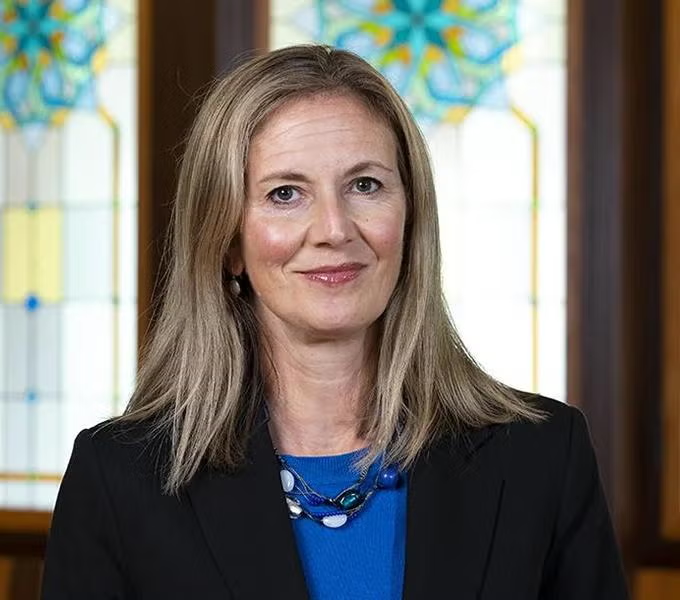 Amanda Godley, vice provost for graduate studies, said that graduate faculty have also been “challenged to think about class sizes for graduate classes. A large percentage of graduate classes here are under five or 10 students per class, she reported. Having taught classes of that size as well as classes of 20, “I prefer the 20 any day,” Godley said. “You can have such better discussion. You can dive better into the material. Otherwise it's like independent study.”
Denman concurred but said that some required courses don't have enough eligible students to reach 20.
“It's challenging for advisors,” committee member Sybil Streeter of Dietrich’s psychology department said: “We really want to see these classes run,” but it doesn’t seem sensible to advise students to enroll in a class that may be cancelled. “We're really not sure of what increasing enrollment, what this first-year level, is going to bring.”
Godley also said there was no mandate from the provost’s office concerning class cancellations: “Each school is different. Each department is different.” Some courses are required for majors or graduate programs and may still need to run regardless of size issues, she added. “This [decision] is particularly tricky for summer term,” since students don't register until last minute for summer until they see their spring grades.
Stoner also noted that cancellations are tough for students who delay registration because of a financial hold or because they are transferring from another school.
Sofia Doval, attending the committee as a representative of the Student Government Board, advocated for “some kind of transparency to students... now that the average student has been feeling effects...” She reported that fellow students have said to her: “‘I haven't been able to get into any of the classes I want.’ There's a lot of fear right now.”
Marty Levine is a staff writer for the University Times. Reach him at martyl@pitt.edu or 412-758-4859.
Have a story idea or news to share? Share it with the University Times.
Follow the University Times on Facebook.